Emergency Broadcasting
Primary Entry Point stations: how a national alert travels
Every national alert in the United States enters the broadcast system through 77 radio transmitters chosen by FEMA, and a 100-watt community station hears it at the end of a chain that starts there.
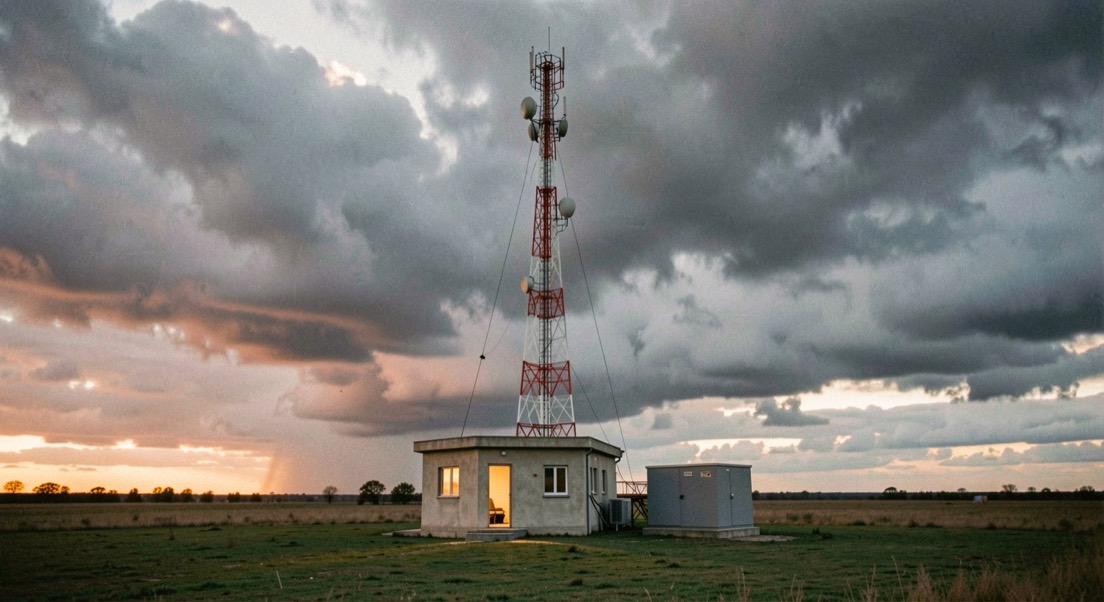
A Primary Entry Point station is one of the private or commercial radio stations that the Federal Emergency Management Agency has designated to receive a national alert before anyone else. FEMA counts 77 of them, connected to its operations centers and backed by generators, and together they reach more than 90 percent of the American population directly. Every other outlet, a 100-watt community signal included, hears a national message second hand, through a chain of stations that begins at one of these transmitters.
That chain is the oldest and least glamorous part of the Emergency Alert System, and the part a small station is most likely to get wrong. It is worth knowing link by link: who sits at the top, how the message moves, what the nationwide tests have exposed, and what the rules ask of a low-power FM station at the far end.
What is the Primary Entry Point system?
FEMA calls the network the National Public Warning System; broadcasters still call it the PEP system, after the designation in the FCC’s alert rules. The section of Part 11 that defines the EAS designations, 47 CFR 11.18, describes a PEP as a private or commercial radio station that cooperates with FEMA and serves as the primary source of initial broadcast for a Presidential Alert, the rule’s older name for the national message. FEMA, not the FCC, chooses the stations. The roster includes some of the best-known call letters in American radio, among them WBZ in Boston, WLW in Cincinnati, WJR in Detroit, KIRO in Seattle and WWL in New Orleans.
Each PEP keeps a direct line to FEMA, described by the Congressional Research Service as a secure telephone connection, plus backup communications equipment and power generators so that the station can stay on the air during and after a disaster. FEMA adds other national entry routes beside the transmitters: SiriusXM carries the message, and the distribution networks of NPR and Premiere Networks give stations outside the reach of a PEP signal another national source to monitor.
How does a national alert travel from FEMA to a small station?
The broadcast path is the daisy chain. FEMA sends the alert to the PEP stations, which put it on the air across their coverage areas. Designated stations listen to them: the rules call a station that carries the national message into a state a National Primary, and each State EAS Plan names Local Primary stations, numbered LP-1, LP-2 and so on, which serve as the monitoring assignments for everyone else. A rural FM station, a cable headend and a low-power community station all sit at the end of that chain, each with a decoder tuned to at least two assigned sources, so that one failed link does not silence a county.
The message itself travels as a SAME header, a short burst of data sent three times so that a decoder can compare the copies and act on two that match. It names an originator, an event, the affected areas, a duration, the time of issue and the station that sent it. For a national alert the event code is EAN. Since a 2022 FCC revision that code displays as “National Emergency Message”, the plain-language successor of the old Emergency Action Notification, and every participant must interrupt normal programming when it arrives, automatically or by hand.
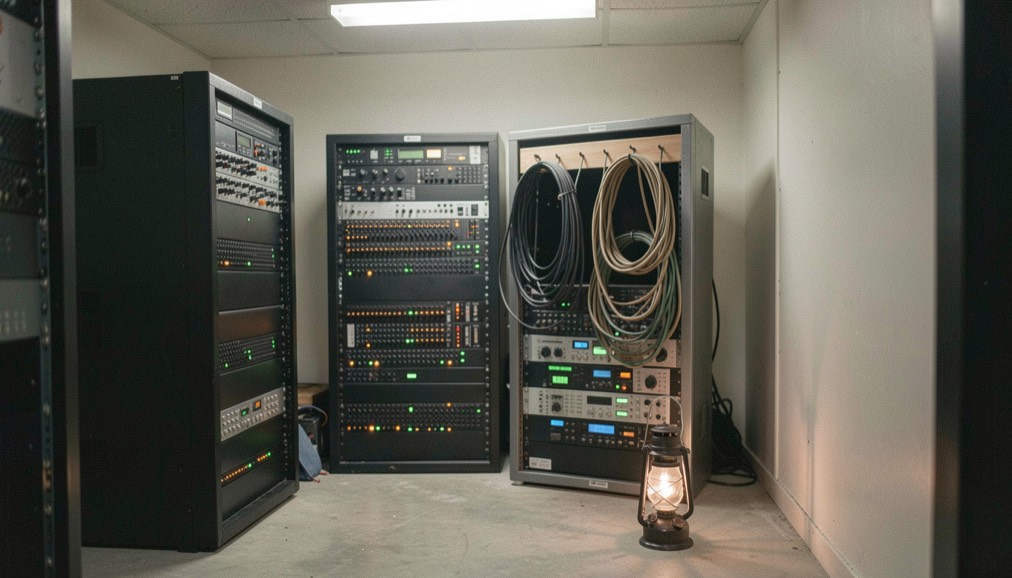
A second path now runs beside the chain. Decoders must regularly poll the Integrated Public Alert and Warning System, FEMA’s internet gateway, for alerts written in the Common Alerting Protocol, which can carry full text and other languages. The two routes back each other up: the internet route is richer, and the broadcast route still works when the internet does not.
Who can send a national alert, and has one ever been sent?
The President can, and since a 2021 FCC change so can the FEMA Administrator and the President’s designees, according to the Congressional Research Service. No national alert has ever been sent for a real emergency. The nearest miss came under the older Emergency Broadcast System: on February 20, 1971, at 9:33 a.m. Eastern, an operator used the wrong tape and a properly authenticated emergency notice went out by mistake. It took about forty minutes to cancel. That morning remains the best argument for drilling the chain often and logging what happens.
Four tests, four lessons
Nationwide tests are the only occasions when the whole chain runs end to end, and the FCC publishes what broke. The first used the live EAN code on November 9, 2011, at 2 p.m. Eastern. More than 80 percent of participants received and relayed it, but the Commission’s report led with widespread poor audio, traced in part to the PEP level, and noted that some areas, the Portland, Oregon market among them, had no PEP of their own. The 2019 test deliberately used the broadcast chain alone: IPAWS carried the message to the PEP stations and no further, so FEMA could see how the system behaves when the internet is not available.
| Test | Route | What the results showed |
|---|---|---|
| November 9, 2011 | Live EAN code through the PEP chain | More than 80 percent of participants received and relayed it; poor audio at the PEP level |
| August 7, 2019 | Broadcast chain only, IPAWS used just to reach the PEPs | 12 of 77 PEP stations had technical problems; 78.6 percent of participants took part, LPFM stations 55.9 percent |
| August 11, 2021 | Broadcast chain | 89.3 percent received the test and 87.1 percent retransmitted it; seven PEP stations reported problems, six of them with audio |
| October 4, 2023 | IPAWS internet path | Retransmission rose to 93.6 percent; 23 percent of participants ran outdated equipment |
Read across the rows, the pattern is plain. The internet route scores better, but the faults that keep returning are monitoring failures and old equipment, and those live at the bottom of the chain, in individual stations, rather than at the top. In 2019 the largest single problem was stations failing to receive from their monitoring sources; in 2023 the participants running outdated gear had the lowest receipt and retransmission rates.
Why are PEP stations being hardened?
The IPAWS Modernization Act of 2015 required FEMA to upgrade PEP stations so that they can keep broadcasting under all hazards, from hurricanes to acts of terrorism. The upgrades bring increased sheltering, expanded broadcast capacity and sustainable power generation, housed in emergency studios built to withstand those events. The work goes station by station: when WBZ finished its upgrade in October 2021 it was the 13th PEP station to do so, and KIRO and WWL followed. The same law directs FEMA to run a nationwide test of the system at least once every three years.
Where does a low-power FM station fit in the chain?
This is the part a volunteer board should have in writing. Under the equipment table in 47 CFR 11.11, an LPFM station must carry an EAS decoder and air audio messages, but it is not required to own an encoder, the box that generates coded headers of its own. The testing rules follow from that. A low-power station logs the weekly tests it receives instead of sending its own, and for the monthly test it airs the test script rather than the full header sequence. Its decoder still has to monitor the two sources its State EAS Plan assigns, and the station still has to interrupt programming for a national message.
Three habits keep a small station honest in the chain. Find the monitoring assignment for your area in the state plan and confirm that the decoder is actually tuned to it, since monitoring failures topped the list in 2019. Keep the decoder’s software current, because outdated equipment had the worst results in 2023. And file in the FCC’s EAS Test Reporting System whenever a nationwide test is called: barely more than half of LPFM stations took part in 2019, against 82 percent of other radio stations. The wider alert machinery, from its Cold War origins to the weather feed, is laid out in our beginner’s guide to the Emergency Alert System, and the console habits for the night it matters are in the community storm playbook. Groups still working toward a license can fold the decoder into the engineering plan of the LPFM startup roadmap.
Questions readers ask about PEP stations
How many Primary Entry Point stations are there?
FEMA and the Congressional Research Service put the network at 77 stations, which together reach more than 90 percent of the population directly. The count can change, because FEMA designates the stations and adds or upgrades them over time.
Is the Primary Entry Point system the same as the Emergency Broadcast System?
No. The Emergency Broadcast System was the predecessor that the Emergency Alert System replaced in 1997. The PEP stations are the national entry layer of today’s EAS, the first transmitters to carry a national message before it moves down the chain.
Does a low-power FM station need an EAS encoder?
No. Part 11 requires an LPFM station to have a decoder and to air national messages and required tests, but it does not require an encoder, so the station receives and relays alerts without originating coded headers of its own.