Stations Near You
Campus radio and the reserved band
The bottom of the FM band was set aside for education before most of the rest of the dial was filled, and the college stations that grew there shaped what American community radio sounds like.
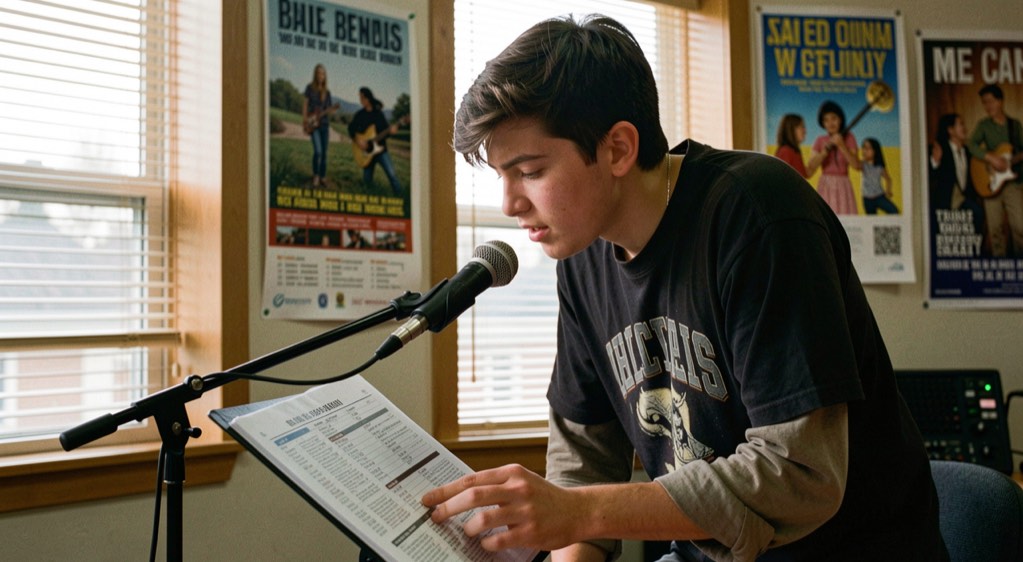
Tune below 92.1 MHz and the character of the dial changes. From 88.1 to 91.9, the reserved portion of the FM band, commercial signals fade out and educational ones take over: colleges, school districts, religious educational broadcasters and public radio affiliates. The reservation was deliberate. When the Federal Communications Commission shaped the post-war FM band, it held the bottom twenty channels for noncommercial educational use, on the theory that a frequency set aside for schools would stay useful to schools even as commercial money crowded the rest of the band. That is the short answer to a question every campus radio fan has asked: why do the college stations all cluster at the bottom of the dial?
What a campus station actually is
The American campus radio scene is older and stranger than its stereotype. Some university stations are full-power noncommercial broadcasters with professional staffs and network affiliations; others are student activity clubs with a hundred watts and a faculty adviser; a growing number hold LPFM licenses, the same 100-watt class this magazine follows, which puts them in the same family as the neighborhood stations in our listening guide to a 100-watt signal. A student station may broadcast from a closet with a borrowed transmitter or from a professional facility with a newsroom, and both count: the shared trait is programming produced by people learning the craft, for a community within reach of the antenna.
The programming culture that grew on the reserved band became the tastemaker of the whole dial. Freeform formats, where the host chooses records rather than a music director, were refined on college frequencies and later carried into low-power and community stations everywhere. Sports, foreign-language programming and public affairs hours that commercial operators would never schedule found permanent homes on campus signals, and the station archives of the 1980s alternative rock era are now the recording history of whole scenes. When the microbroadcasters of the 1990s demanded a legal low-power service, as told in our pirate to licensed history, they pointed at the campus band as proof that small noncommercial signals enrich a dial instead of interfering with it.
Finding and using the campus band
For a listener, the reserved band is the easiest part of the dial to explore, because the stations are mapped well and their formats rarely change with ratings seasons. The same public tools used for the rest of the dial, from the FCC’s LMS database to the volunteer directories described in our dial search guide, cover the reserved band completely, and most campus stations stream as well, which solves the physics problem that their signals were often engineered for a dormitory district rather than a whole county. Alumni listeners who move away are the reason campus streamers carry call letters as brands.
For a school or a community group near one, the band also teaches a regulatory lesson. The reserved channels are licensed to educational applicants under the same general framework the LPFM service uses, with the same prohibition on commercial advertising, and the FCC’s educational point system rewards exactly the community institutions described in our point system guide. A high school that cannot win a reserved channel sometimes fits an LPFM channel higher up the dial instead, and the roadmap in starting an LPFM station treats both routes side by side. The dial’s bottom edge, in other words, is not a museum: it is the proof of concept the rest of community radio stands on.
Join one before you judge one
Campus stations run on volunteers from outside the student body more often than their names suggest. Community members sit on advisory boards, mentor hosts, engineer remotes and read news during vacation gaps, and alumni support keeps streams and equipment budgets alive. The fastest way to understand this whole world, before the sound of a 100-watt signal or the paperwork of a filing window, is one season inside a studio: a training night, a shadowed shift, a Sunday slot nobody else wants. The reserved band has been quietly teaching radio citizenship for three quarters of a century, and it still accepts students. The record culture those freeform shows draw on is mapped in our guide to independent labels and local scenes, and a campus station that wants to carry the town’s own celebration live can start with our guide to putting a hometown festival on the air.